- March 23, 2026
- by anilraikwarseo
- SEO Trends
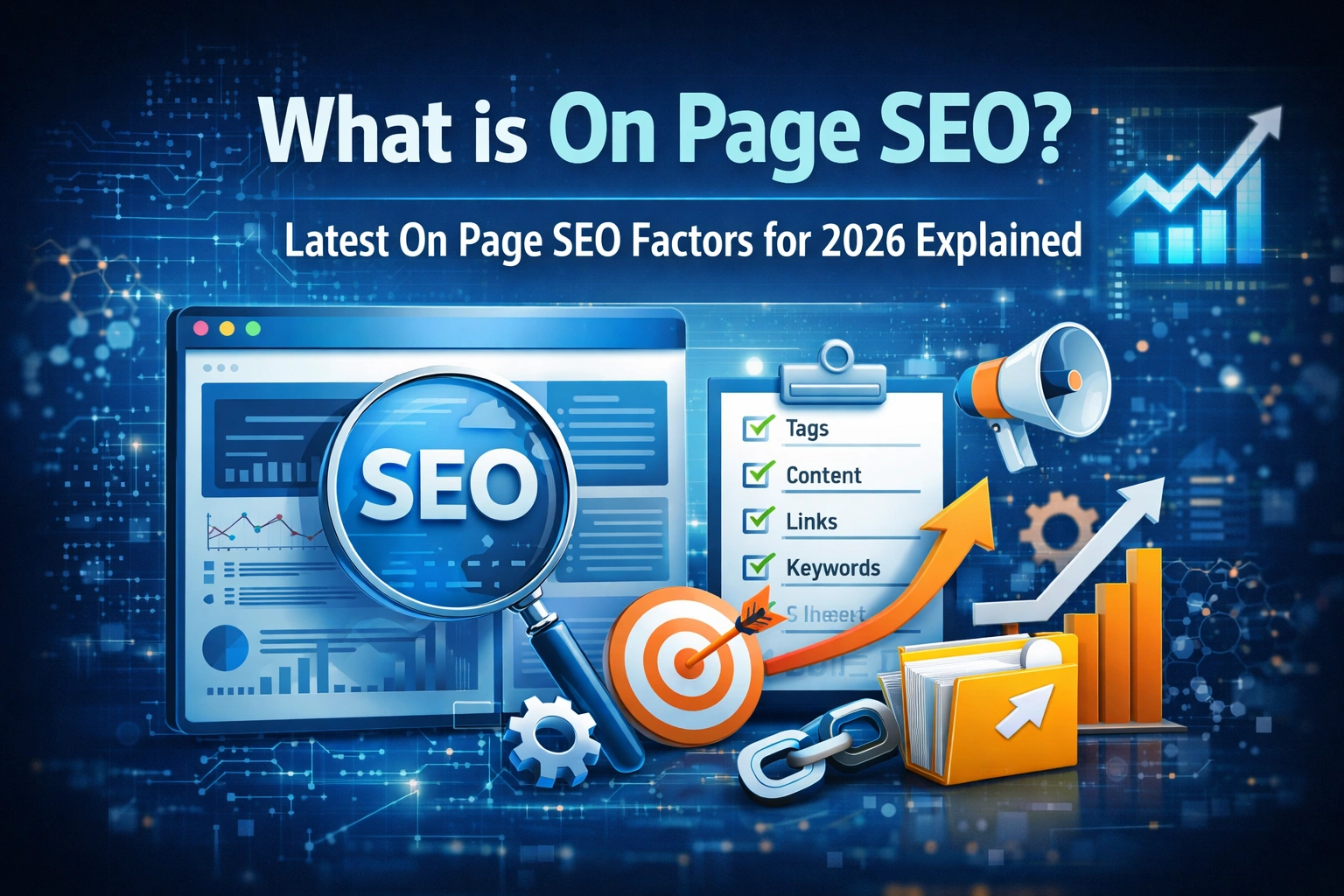
Hello everyone, and welcome once again. In this blog, we are going to deeply understand On-Page SEO, its meaning, its importance, and how it is evolving in 2026.
Search Engine Optimization (SEO) is the process of ranking web pages on search engines like Google by following proper guidelines. These guidelines are broadly divided into three major categories:
- On-Page SEO
- Off-Page SEO
- Technical SEO
All the steps, processes, and strategies you perform in SEO fall into one of these categories. In this blog, we will focus entirely on On-Page SEO, starting from the basics and moving towards advanced and modern ranking factors.
On Page SEO is Always Page-Wise – A Fundamental Concept
Before going deeper, you must understand one very important concept:
👉 SEO is always done page-wise, not website-wise.
A website is simply a collection of multiple pages:
- Homepage
- About Us page
- Services page
- Blog pages
- Landing pages
For example, if you want to rank for “web development services,” you are not optimizing your entire website—you are optimizing a specific page dedicated to that keyword.
That means:
- Keyword research is done for a specific page
- Content is written for that page
- Backlinks (off-page) are often targeted to that page
Even when we say “ranking a website,” we are usually referring to ranking the homepage.
This clarity is essential to properly understand On-Page SEO.
What is On-Page SEO?
On-Page SEO is the process of optimizing:
👉 Visible content on a web page
👉 HTML source code of that page
This includes everything users can see and interact with, as well as certain backend elements.
Two Main Areas of On-Page SEO:
- Visible Content Optimization
- Text
- Images
- Headings
- Structure
- Code-Level Optimization
- HTML tags
- Schema markup
- Meta tags
Do You Need Coding Knowledge for On-Page SEO?
This is a common question.
👉 The answer: Basic knowledge of HTML is highly recommended, but not mandatory.
- If you learn basic HTML in 7–10 days, it gives you a strong advantage.
- If you work on platforms like WordPress, many things are easy to manage.
- For custom websites, developers may assist you, but understanding basics like:
- Hosting
- File structure
- .htaccess
- Page source
…will make you a better SEO professional.
On-Page SEO vs Technical SEO
Many beginners confuse these two.
On-Page SEO:
- Focuses on individual pages
- Deals with content and page elements
Technical SEO:
- Focuses on entire website
- Deals with:
- Website speed
- SSL certificate
- Crawling & indexing
- Mobile responsiveness
👉 Example:
- Optimizing content on a page = On-Page SEO
- Improving site speed globally = Technical SEO
Core Elements of On-Page
Let’s now go deeper into the key elements you must optimize.
1. Content Structure
Content structure is the foundation.
- Every keyword should have a dedicated page
- Avoid targeting multiple unrelated keywords on one page
- Organize content logically
👉 If you don’t create a proper page for a keyword, ranking becomes difficult.
2. Title Tag Optimization
- Include your primary keyword in the title
- Keep it natural and user-friendly
- Avoid keyword stuffing
❌ Bad: “Digital Marketing Course Digital Marketing Course Best Course”
✅ Good: “Best Digital Marketing Course for Beginners in 2026”
3. Meta Description Optimization
- Write compelling and relevant descriptions
- Include keywords naturally
- Focus on increasing CTR (Click Through Rate)
4. Header Tags (H1 to H6)
Header tags help:
- Structure content
- Improve readability
- Help search engines understand hierarchy
👉 Always use:
- One H1
- Multiple H2, H3 as needed
Avoid writing everything in plain paragraphs.
5. Image Optimization
Important factors:
- Image size (affects loading speed)
- Alt text (describes the image for search engines)
- File naming
👉 Example:
on-page-seo-checklist.jpg is better than IMG1234.jpg
6. Internal Linking
Internal links help:
- Distribute page authority
- Improve navigation
- Increase user engagement
👉 Example: Link related blog posts within your content.
7. Content Depth
This is extremely important.
- Cover topics in detail
- Answer user queries completely
- Provide better information than competitors
👉 Your content should either:
- Go deeper
OR - Be better than existing top-ranking pages
8. Schema Markup
Schema is a code-based element that helps search engines understand your content better.
Examples:
- FAQ schema
- Review schema
- Article schema
Even though it’s not visible, it is part of On-Page SEO.
9. URL Optimization
- Keep URLs short and meaningful
- Include keywords
- Avoid unnecessary parameters
✅ Example:
/on-page-seo-guide
❌ Example:
/page?id=12345
Latest On-Page SEO Factors for 2026
SEO is evolving rapidly, and modern algorithms are becoming user-centric.
Let’s understand the latest factors.
1. User Experience (UX)
Google now tracks:
- How users interact with your page
- Whether they stay or leave quickly
👉 If users bounce immediately, rankings drop.
2. Search Intent Optimization
You must match content with user intent.
Examples:
- “Digital marketing course” → informational + commercial
- “Buy iPhone” → transactional
👉 If your content doesn’t match intent, it won’t rank.
3. CTR Optimization
Your title and description should:
- Attract clicks
- Stand out in search results
Higher CTR = Better ranking signals.
4. Page Speed
- Faster pages rank better
- Improves user satisfaction
5. Engagement Metrics
Google considers:
- Time on page
- Scroll behavior
- Click interactions
👉 More engagement = stronger ranking signals
6. E-E-A-T Framework
Very important in 2026:
- Experience
- Expertise
- Authoritativeness
- Trustworthiness
👉 Your content must be:
- Original
- Genuine
- Reliable
The Big Shift: From Keywords to Users
Earlier SEO was about:
- Keyword placement
- Keyword density
Now SEO is about:
👉 User satisfaction
Google’s goal:
- Keep users happy
- Show relevant content
- Provide best experience
If your content:
- Is helpful
- Matches intent
- Engages users
👉 You will rank.
Final Thoughts
On-Page SEO is not just about placing keywords anymore. It is a complete process that involves:
- Content quality
- Structure
- Optimization
- User experience
And most importantly:
👉 SEO is not about tricks. It’s about becoming better than your competitors.
If you focus on:
- Strong fundamentals
- User-first content
- Continuous improvement
Then On-Page SEO becomes much easier and more effective.